Ford Transit Ignition Problems: Key Won’t Turn — Overview
Understanding Common Challenges and Solutions: Addressing ford transit door and ignition barrel issues for Better Vehicle Performance
Common Ford Transit Door and Ignition Barrel Issues: What You Should Know
Ford Transit Door and Ignition Barrel Issues: What Every Owner Needs to Know
Exploring Ford Transit Door and Ignition Barrel Issues: Key Insights
Addressing Ford Transit Door and Ignition Barrel Issues for Enhanced Safety
Identifying Ford Transit Door and Ignition Barrel Issues for Better Maintenance and Safety
Ford Transit Door and Ignition Barrel Issues: A Comprehensive Guide
Understanding the common ford transit door and ignition barrel issues is crucial for every Ford Transit owner. These ford transit door and ignition barrel issues can cause significant problems if not addressed in a timely manner. Regular maintenance can help to mitigate the impact of ford transit door and ignition barrel issues.
One of the most frequent complaints from Ford Transit owners is that the ignition key won’t turn when inserted — sometimes it won’t even go in, or it feels jammed or gritty.
Many Ford Transit owners experience ford transit door and ignition barrel issues, leading to frustration and inconvenience. Identifying the signs of these ford transit door and ignition barrel issues can save time and money in repairs.
Addressing ford transit door and ignition barrel issues promptly is essential for maintaining your vehicle’s performance. If you notice any symptoms related to ford transit door and ignition barrel issues, consider inspecting your ignition system closely.
Understanding ford transit door and ignition barrel issues can help you avoid getting stranded. The ignition key’s functionality is vital for the overall operation of your Ford Transit, especially regarding ford transit door and ignition barrel issues.
These ford transit door and ignition barrel issues can lead to significant inconveniences if not addressed promptly, impacting your daily routine.
This problem can affect various Transit models (especially Mk7, Mk8, and Transit Custom) and usually manifests gradually — at first the key may feel sticky or stiff, then eventually it refuses to turn at all.
The frequent occurrence of ford transit door and ignition barrel issues emphasizes the importance of regular checks and maintenance to ensure the longevity of your vehicle.
1. How the Ignition Works
The ignition system includes:
- A key with a precisely cut profile
- An ignition lock cylinder / barrel with pins or wafers
- A steering lock mechanism that engages when the vehicle is off
When everything is working correctly:
- The key inserts smoothly
- It aligns the internal wafers or pins
- The cylinder turns, releasing the steering lock and allowing the vehicle to start
When any of these pieces wear down or get misaligned, the key may not turn — even though the key fits.
2. Common Causes of a Key That Won’t Turn
a) Worn Ignition Barrel / Internal Pins
Over time, the internal wafer pin springs wear out or lose tension. As a result:
- Pins no longer align with the key
- The key can’t push them to the correct height
- The barrel jams and won’t rotate
This is very common on Transit vans used frequently — especially in commercial service.
b) Worn Key Blade
Frequent daily use wears down the key edges, so even if the key still looks okay, its profile may not match the barrel anymore. Dirt and moisture accelerate this wear.
c) Dirt/Environmental Contamination
Dust, grit, moisture, and debris can enter the ignition barrel and clog the internal mechanism, increasing friction and causing keys to stick.
d) Steering Lock Engagement
If the steering wheel is turned slightly after shutdown, the steering lock can engage tightly and prevent the key from turning until the wheel is wiggled to release pressure. This can feel like an ignition problem when it’s really a steering lock issue.
e) Mechanical Misalignment
Bushings or housings inside the steering column can misalign over time, adding tension or binding the key mechanism.
f) Ignition Switch or Electrical Issues
In some cases, especially on newer models with transponders and immobilizers, electrical faults or ignition switch failure can stop the engine from starting even if the key turns — but this often goes with other symptoms like flickering lights.
3. Recognising the Symptoms
Before total failure sets in, you might notice early warning signs such as:
- Key is hard to insert or remove
- Key feels rough or gritty inside the barrel
- Ignition feels “sticky” and needs force
- Key turns partially, then stops
- Ignition turns but vehicle doesn’t start
- Dashboard lights flicker when turning the key
4. What You Can Try (Carefully)
Warning: Never force the key. Doing so can break it in the barrel and make repair much harder.
Step-by-Step
- Wiggle the steering wheel gently while trying to turn the key — this can release the steering lock if that’s the issue.
- Test the spare key to see if the problem persists — this helps determine if the key blade is worn.
- Use a special graphite dry lubricant (only recommended types) — avoid WD-40 or thick greases that can trap grit.
- Don’t spray random lubricants inside; it can make the problem worse by attracting debris.
5. Professional Fixes
If simple steps don’t help, a mechanic or auto locksmith can:
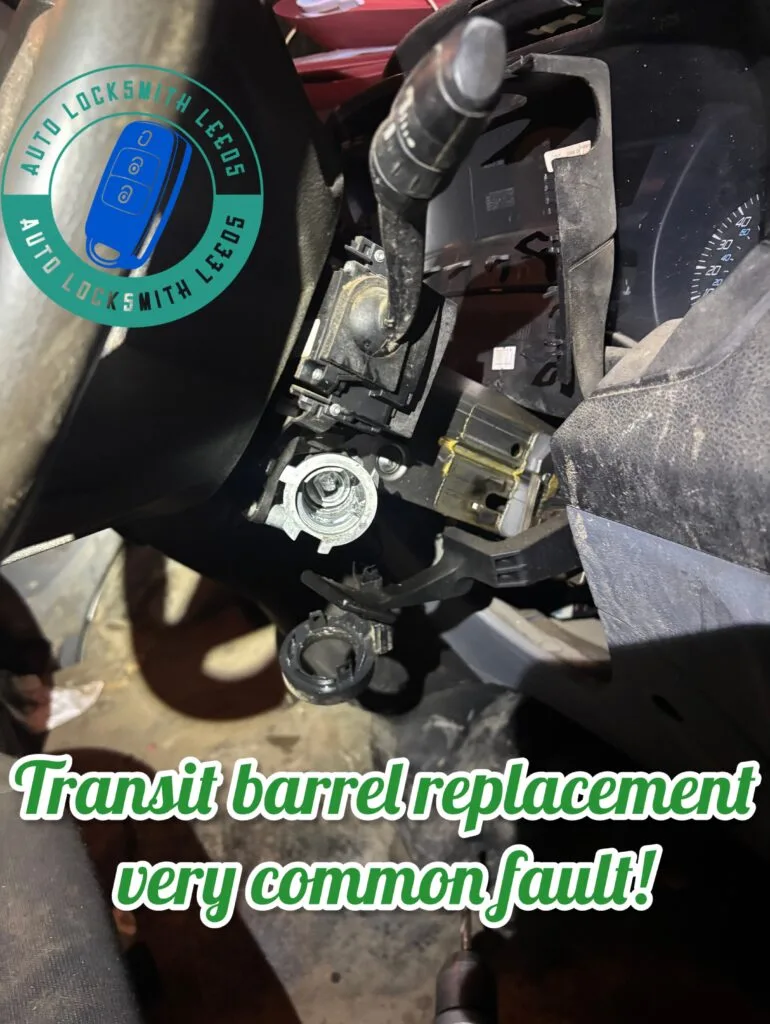
Ignition Barrel Replacement
Replace the worn cylinder with a new one keyed to your existing key — this is the most common and reliable long-term fix.
New Key Cut
If the key is worn but the barrel is okay, getting a new blade cut to the original spec will often solve the problem.
Full Lock Set Replacement
In severe wear, replacing all locks (ignition, doors) with a matched new set may be best.
6. Tips to Avoid Future Ignition Problems
- Use your key gently — avoid heavy keychains that add weight and wear.
- Don’t force the key when it feels stiff — address small issues early.
- Keep the interior clean — avoid debris entering the ignition hole.
- Service early signs — early attention can prevent a breakdown.
Summary
A Ford Transit key that won’t turn is most often due to ignition barrel wear or key wear, but it can also be caused by steering lock bind or contamination. Regular use and harsh environments make this one of the most common Transit faults, but with early action and the right repairs it can be fixed reliably.
Ford Transit Van Door Lock Security Issues – An Overview
Ford Transit vans are among the most widely used commercial vehicles in the UK and Europe. Their popularity, however, has made them a frequent target for theft. One of the biggest concerns raised by owners and fleet operators is poor door-lock security, particularly on older models and Transit Custom variants. While Transits are reliable work vehicles, their factory locking systems have long been criticised for being relatively easy to defeat and prone to wear.
1. Why Ford Transit Door Locks Are Vulnerable
a) High-Use, Wear-Prone Design
Transit vans are designed for frequent daily access—sometimes dozens of door openings per day. Over time, this heavy use causes:
- Worn lock barrels
- Loose internal wafers
- Reduced resistance to force
Once worn, locks no longer sit tightly in the door skin, making them easier to damage or manipulate.
b) External Lock Exposure
On many Transit models, the driver and passenger door locks are fully exposed on the outside of the vehicle. This makes them:
- Easy to access
- Easy to grip or strike
- Vulnerable to physical attack
Unlike some newer vans with recessed or shielded locks, older Transits offer little factory protection.
c) Thin Door Skins Around Locks
The metal around the lock barrel is relatively thin. This means that even if the lock itself is strong, the surrounding structure may flex or fail before the lock does. Once the barrel shifts or collapses inward, the door mechanism can disengage.
2. Common Door Lock Security Problems Reported by Owners
a) Lock Barrel Failure
A frequent issue is the lock barrel spinning freely without unlocking the door. This can be caused by:
- Internal clip failure
- Broken retaining tabs
- Excessive wear
To prevent transit ignitoin barrel and door issues, keep your keys clean and ensure the ignition area is free of debris. Ignoring transit ignitoin barrel and door issues can lead to more severe problems over time.
Many drivers have reported various transit ignitoin barrel and door issues, which can be easily identified through careful observation. By staying vigilant, you can address transit ignitoin barrel and door issues before they escalate.
In summary, the key to avoiding frequent transit ignitoin barrel and door issues lies in regular maintenance and awareness of your vehicle’s functionality.
When this happens, the door may not unlock at all—even for the owner.
b) Central Locking Override
Many Transit models rely heavily on central locking. If the external lock is damaged:
- The mechanical override may stop working
- Owners are locked out even with a key
- Electronic unlocking becomes the only option
Understanding Transit Ignitoin Barrel and Door Issues
This is a serious weakness if the battery fails or the locking motor malfunctions.
c) Rear and Sliding Door Weak Points
Rear barn doors and sliding side doors often have:
- Fewer reinforcement points
- Larger panels that flex under pressure
- Locks positioned near door edges
These doors are commonly targeted because once opened, the entire load area is exposed.
3. Model-Specific Concerns
While security issues can affect many vans, owners most often report problems with:
- Transit Mk6 / Mk7 – basic lock designs, heavy wear over time
- Transit Custom (early models) – exposed barrels and limited factory shielding
- High-mileage fleet vans – locks worn far beyond private-use expectations
Newer models have improved electronics, but physical lock security remains a concern.
4. Consequences of Poor Door Lock Security
The impact of weak door locks goes beyond inconvenience:
- Tool and equipment theft
- Vehicle downtime
- Increased insurance premiums
- Damage to doors and panels
- Lost income for tradespeople
Even failed theft attempts often cause hundreds or thousands in repair costs.
5. Legitimate Ways Owners Improve Transit Door Security
Rather than relying on factory locks alone, many owners take additional steps:
a) Lock Shields / Lock Covers
Metal shields fitted over the original lock barrel:
- Protect against physical attack
- Reinforce the door skin
- Are visible deterrents
b) Secondary Mechanical Locks
Extra locks on rear and side doors:
- Operate independently of factory locks
- Prevent doors opening even if the main lock fails
c) Internal Deadlocks or Slamlocks
Common on work vans:
- Automatically lock when doors close (slamlocks)
- Require a separate key from the outside
d) Electronic and Alarm Upgrades
- Upgraded alarms
- Load-area sensors
- GPS tracking (for recovery, not prevention)
6. Maintenance and Prevention Tips
- Avoid forcing stiff locks—repair early
- Replace worn barrels before total failure
- Keep locks clean and dry
- Avoid heavy keyrings that stress lock cylinders
- Inspect rear and sliding doors regularly
Conclusion
Ford Transit vans are dependable workhorses, but their door lock security has long been a weak point, especially on older and high-use models. Exposed lock barrels, wear-prone designs, and limited factory reinforcement make them more vulnerable than many owners expect. As a result, additional security measures are not optional for many users—they’re essential.
Overall, understanding and addressing transit ignition barrel and door issues is paramount for every Ford Transit owner to ensure safe and reliable operation.